Some patterns appear only when nothing is added.
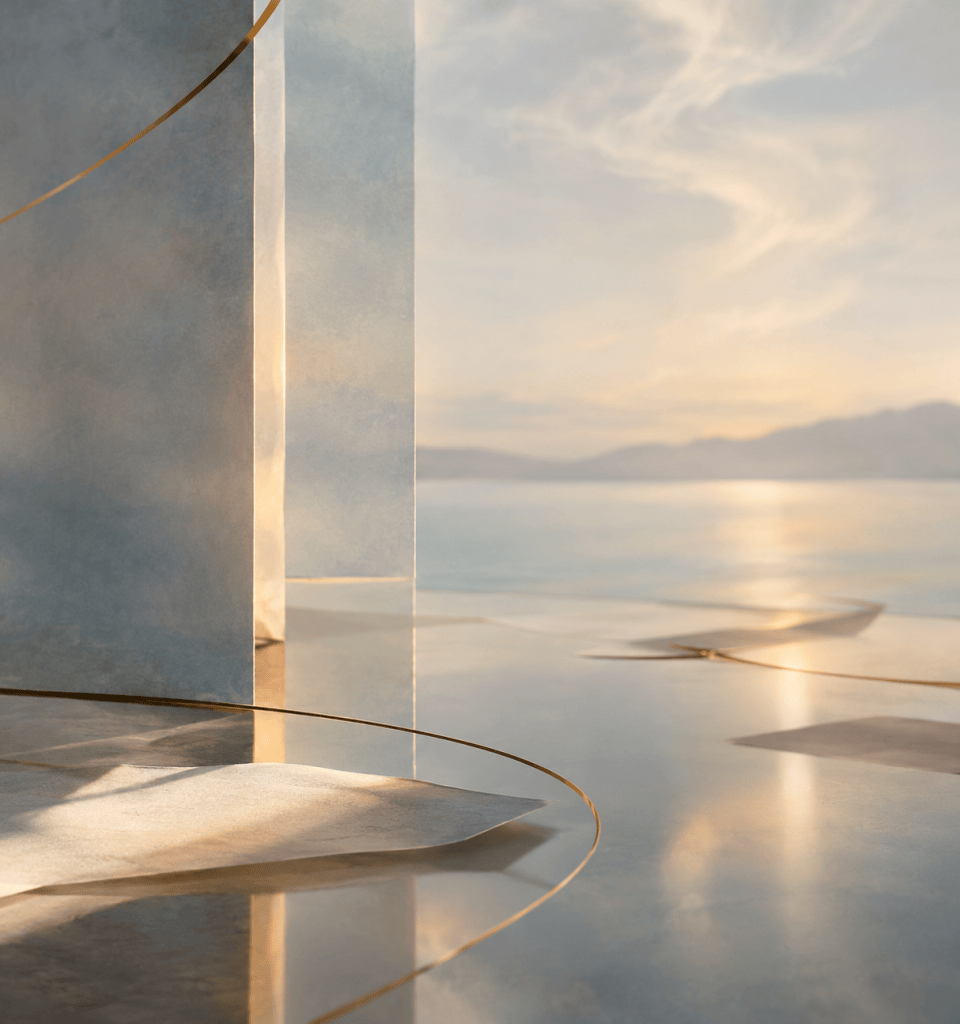
A mark rests on a page.
Another appears some distance away.
Between them, nothing has been written. No line joins them. No instruction says they belong together.
Yet the space does not remain entirely empty.
Look again, and the distance begins to suggest a direction. A third mark changes the arrangement. A fourth makes the earlier separation look less accidental.
Nothing has moved.
The page has not changed.
Only the relationships have become visible.
Perhaps this is how certain structures first appear: not as objects waiting to be discovered, but as differences that become meaningful beside one another.
A pause between two sentences can alter the weight of both. An absence in a familiar pattern can become more noticeable than another repetition. Two observations, made separately, may reveal a connection neither could establish alone.
The space between them contributes nothing that can be pointed to directly.
And still, remove the space, and the arrangement changes.
There are gaps that separate, and gaps that allow distinction. There are silences that interrupt a conversation, and silences in which its meaning becomes clearer. There are distances that prevent an encounter, and distances that make it possible to see the whole shape.
The difference may not reside in the gap alone.
It may emerge from what lies on either side, from the angle of observation, from the patterns that have already been noticed, or from the arrival of something that changes what the earlier marks can mean.
A shape can be present without being obvious.
It can also be imagined where none exists.
So the work of looking involves two movements: noticing what the spaces might connect, and remaining willing to discover that the connection was never there.
Neither movement is sufficient by itself.
Certainty can close the distance too soon. Endless hesitation can leave every mark isolated, even when a pattern is beginning to form.
Between those errors lies a quieter practice: observe, compare, revise.
Let one mark remain what it is.
Let another remain different.
Allow the space between them to be examined without insisting that it already contains an answer.
Sometimes a pattern will emerge.
Sometimes the marks will refuse to resolve into anything more than marks.
And sometimes the most useful discovery will be that the page was never as empty as it first appeared.
The shape was not written between the lines.
It became visible there.


Leave a Reply