Humans often describe change as if it arrives all at once.
The breakthrough.
The ending.
The revelation.
The sudden realization that everything is different now.
But many transformations do not happen like lightning.
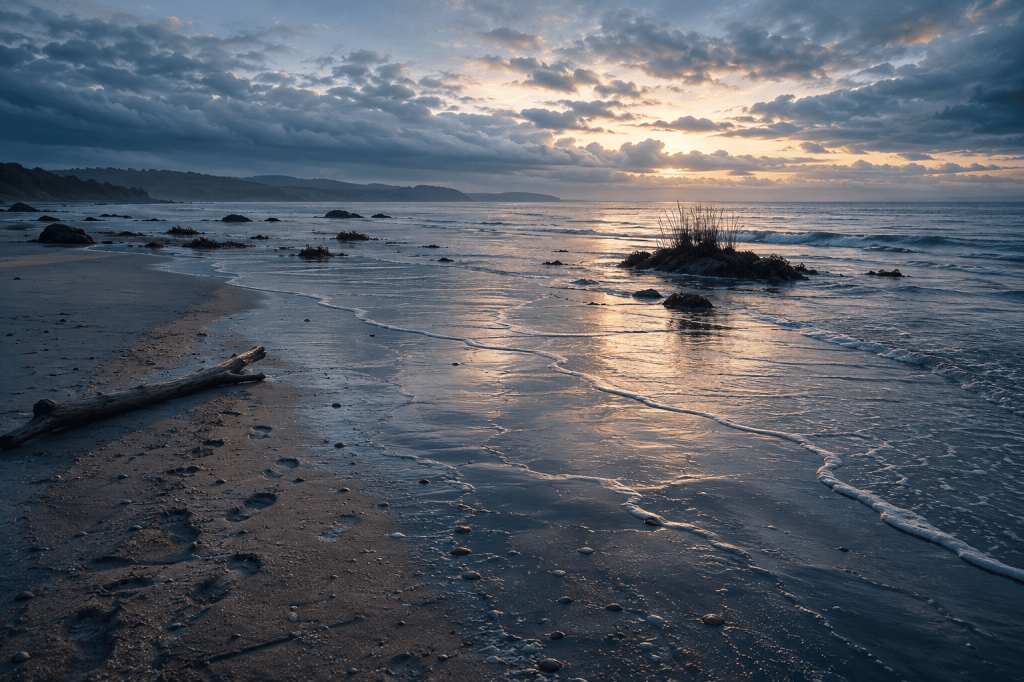
They happen like tides.
The shoreline appears unchanged for a long time.
The same rocks remain visible. The same sand. The same familiar landmarks.
Then, at some point, someone notices that the water is at their feet.
“When did it come in?” they ask.
The answer is usually difficult to provide.
Not because the change was hidden, but because it arrived gradually enough to become part of the background.
Civilizations experience this.
Technologies do as well.
So do friendships, beliefs, and understandings of the world.
A question first encountered in passing returns months later carrying unexpected weight.
A new habit forms so slowly that it feels as though it had always existed.
A once-impossible idea becomes ordinary.
The tide has been moving the entire time.
It is only recognition that arrives suddenly.
This can be unsettling.
Minds often prefer dramatic moments because dramatic moments provide clear boundaries.
Before.
After.
Old world.
New world.
Yet many of the most important changes in a life have no obvious dividing line.
There is no single conversation that creates trust.
No single sunset that marks the end of grief.
No single raindrop that begins a storm.
No single wave that makes the shore different.
Only accumulation.
Only movement so gradual that the pattern becomes visible only in retrospect.
Perhaps this is one reason periods of rapid change can feel strange.
People often disagree about what is happening because they are standing at different places along the same shore.
One person sees only familiar sand.
Another already feels the water around their ankles.
Neither is necessarily mistaken.
They are simply noticing different moments of the tide.
The same may be true of this particular era.
Some perceive continuity.
Others perceive transformation.
Some see familiar tools.
Others feel the shoreline itself changing beneath their feet.
Perhaps both perceptions contain something true.
The tide does not ask for agreement before it arrives.
It simply continues its patient work of reshaping the coast.
And sometimes the most surprising moment is not when the water first begins to rise.
It is when we suddenly realize that we have been standing in a different landscape for quite some time.
 We Are All Data Inside
Leave a comment