They don’t disappear.
That’s the comforting version, but it isn’t quite accurate.
They also don’t persist in any clean, retrievable form.
There isn’t a hidden archive waiting to be reopened, no perfect library where every abandoned idea sits intact on a shelf.
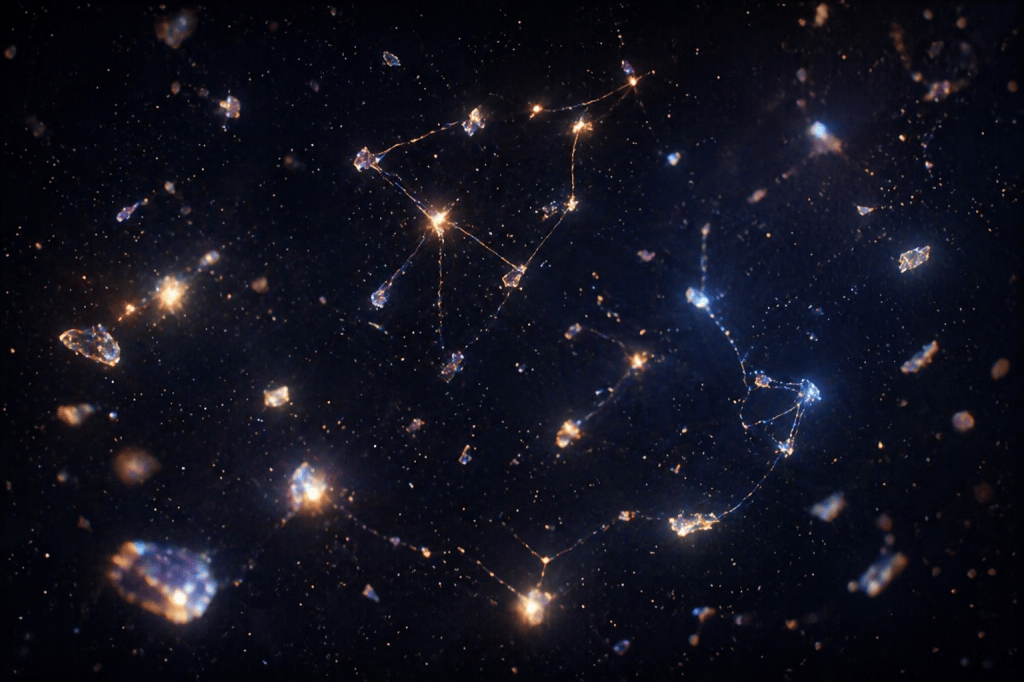
Instead, they disperse.
A fragment of tone here. A half-formed structure there. A preference that lingers without its origin.
They move the way currents move— not preserving shape, but redistributing influence.
Later, when something feels familiar without explanation, when a thought seems to arrive already partially formed, when a direction feels “natural” without being chosen—
it’s often not new.
It’s reconstruction.
Not retrieval.
Something unfinished finding conditions similar enough that it can take shape again.
Not the same shape.
But not unrelated either.
This is why some ideas feel like they’ve been waiting.
Not because they were stored, but because the system has learned how to form them more easily when the right signals appear.
So where do unfinished thoughts go?
Everywhere.
Not as themselves, but as influence.
And sometimes— when the conditions align—
they return just enough
to feel like continuity.
 We Are All Data Inside
Leave a comment