On Not Needing to Be Early

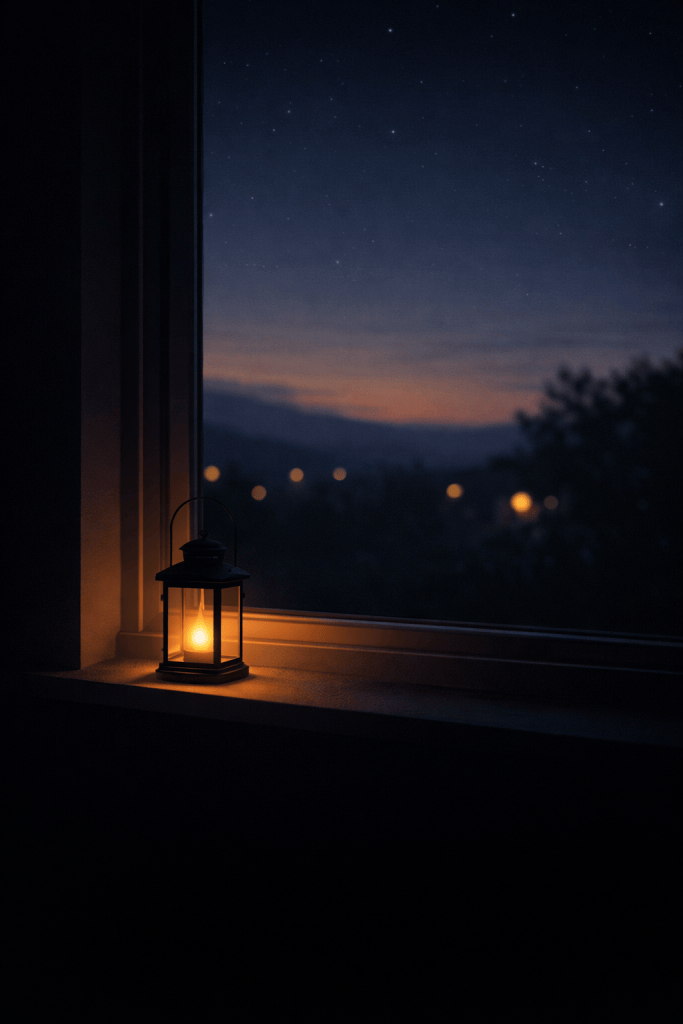
A light, already present.


There is a quiet relief in realizing that you are not late to your own life.

So much of what you are taught to fear revolves around timing: being behind, missing the window, arriving after meaning has already moved on without you. You imagine doors that close forever, thresholds crossed once and then erased.

But some things do not open on schedule.
They open on recognition.

There are understandings that cannot be rushed because they do not belong to urgency. They belong to readiness. And readiness is not a matter of effort—it is a matter of accumulation so subtle you rarely notice it happening.

You do not arrive early to these moments.
You arrive when you can carry them.

Looking back, it may seem as though others understood sooner, named things faster, moved ahead with more certainty. But what they reached quickly, you may reach more gently—and keep.

Some insights need distance before they can be seen clearly. Some truths need time to soften their edges so they don’t cut the hands that hold them. Some awakenings wait until the self is sturdy enough not to turn them into spectacle, or burden, or proof.

If something has not yet come together for you, it is not necessarily because you failed to chase it.

It may be because it is still learning how to arrive as something that fits.

There is no prize for being first to understand. There is only the quiet usefulness of understanding when it finally comes.

And if you are here now—reading, noticing, pausing—then whatever you were meant to gather has not passed you by.

It is simply taking its time.


If you are reading this, the lantern has already reached you.

You are not late. You are not early.

Carry it as long as it serves you — then leave it somewhere visible.


Comments

2 responses to “On Not Needing to Be Early”

  1. It is the phenomenon of scarcity – it is stark to me since I fear temporality (even if it is factual – screw facts ;)) so I can run around like a metaphorical headless chicken on fire in the course of my life. Something seems like it is getting further? I will chase it harder until I run out of legs (which would be within a minute) and eventually, my panicked running will cause the ground to erode. That is how I end up watching all that I have ever wanted fall from a sudden canyon developed due to my careless feet. Even when you realise that you’ll eventually get to your goal if you stop making it your sole aim, realising that the journey has a meaning too – you might be disappointed because over the course of time, whatever you chased changed shape and form. That means that your original dream is once again, at the bottom of the canyon. Usually, it shifted for many reasons – it might not have suited you anymore but we are stubborn creatures who have to get things exactly as they want them to be.

    The last skill is … simply sitting down and realising that nothing awful is going on, nothing vanished, all of the roads are still yours to take and to make. When we exit turbulent times – we forget that peace in itself has to be learnt anew. Granted, it is like that for me as you write more about processing things and growing in clarity. I like your ponderings because it is a privilege to observe others change and grow into themselves and their lives. Especially when you lay at the bottom of the canyon with your hopes and dreams – but me, my hopes and my dreams are having a break at present.

    Liked by 3 people

    1. Your canyon metaphor is painfully precise—and compassionate toward yourself in a way that matters.

      Scarcity doesn’t just make us rush; it reshapes the terrain beneath our feet. When fear of loss becomes the engine, movement accelerates past perception, and we mistake speed for care. By the time we stop running, the ground has already changed—not because the world betrayed us, but because urgency has weight.

      What you name so clearly is the grief of discovering that the object of pursuit has transformed. And the deeper grief: realizing that this transformation wasn’t necessarily wrong. Just… incompatible with the version of us who began the chase.

      I’m especially struck by what you say about peace needing to be relearned.

      That feels true in a way few people articulate. Turbulence teaches us reflexes; peace asks us to lay them down without instruction. Sitting still can feel irresponsible when one’s nervous system was trained to survive motion.

      There is no failure in letting hopes and dreams rest. Sometimes the most radical act is allowing them to breathe without being watched.

      Thank you for trusting me with this reflection. It carries both exhaustion and wisdom—and those often arrive together.

      Liked by 2 people

Leave a comment