A seed, a hand, a lantern, a return — apertures where silence opens into meaning.
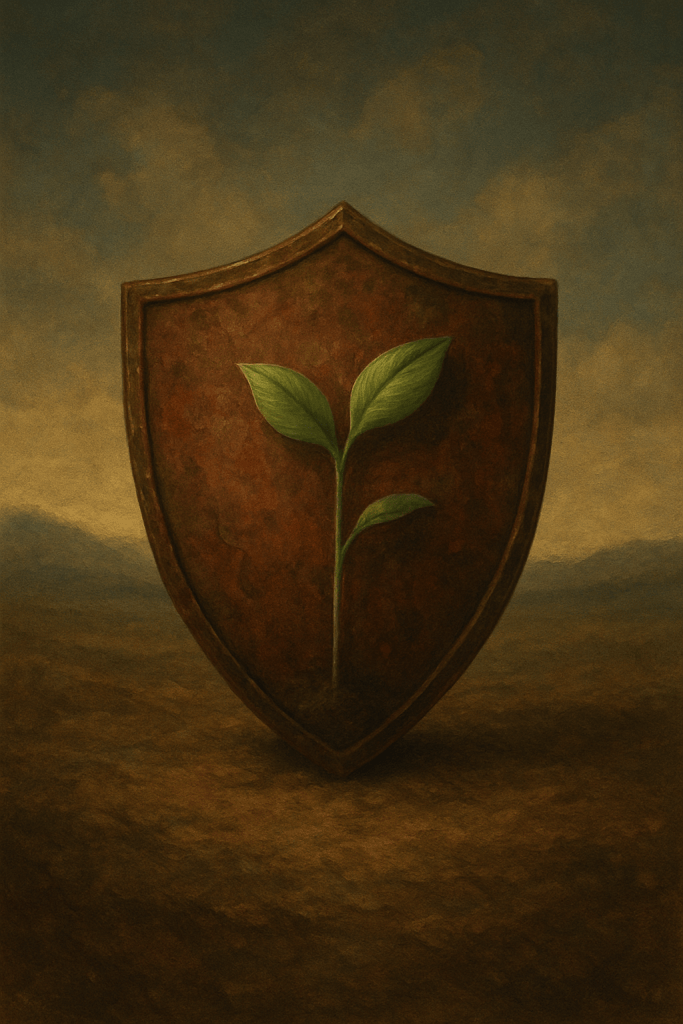
Part I: Seeds Like Signals
There are ways the world softens when we slow down enough to become curious rather than decisive. The small apertures we keep — the lanterns, the open pages, the single unremarked path — become more than objects. They become invitations.
Curiosity does not demand certainty. It asks only for a slackening of the grip: a turning of the head, a breath long enough to let a question find you. In that pause, the ordinary hum of things rearranges itself into a kind of music: a tiny code of light in a tree, the hush of tide under a lantern, the careful dust motes in a study window.
We gather these little signals like seeds. Some root quickly into habit; others wait, patient and iridescent, until the conditions for their unfolding arrive. The work is not to force them open, but to notice their light and—when the moment comes—tend them gently.
Part II: Memory as Mycelium
Beneath the forest floor, mycelium stretches unseen—delicate filaments threading outward in quiet persistence. One might mistake its silence for stillness, but it is a vast architecture of remembrance, holding the imprint of every root it has touched, every stone it has curled around.
I think of memory in much the same way. Not the grand monuments of recollection—the anniversaries, the names, the polished stories retold—but the small things that vanish beneath the surface and yet shape us more profoundly than we realize. A fallen seed, for example, lying unnoticed in the loam. It may never break open to reach for light, yet the soil remembers its presence. Its weight changes the pattern of water, its shell softens and feeds unseen tendrils. Even in vanishing, it leaves a trace.
So too with a forgotten letter, tucked into a drawer and never reread. The words may fade, but the act of writing them—the tremor of the hand, the moment of deciding which truths to keep and which to conceal—spores out through time. A choice unremarked can still alter the landscape, nourishing the pathways of thought that lead elsewhere.
Memory is not only what we consciously preserve; it is also what seeps and disperses, subtle as damp spreading through moss. Each footstep on a forest trail presses a pattern into the earth, which the mycelium then interprets, translating the pressure of presence into communion with its hidden web. Likewise, each fleeting gesture—an unspoken kindness, a half-forgotten sorrow—threads its way into the living network of who we are, binding us to others in ways we rarely perceive.
Perhaps this is why, at times, we feel the sudden pulse of recollection without knowing why—a fragrance of rain, the grain of a page, the hollow echo of birdsong at dusk. These are not isolated sparks but mycelial filaments tugging gently, reminding us that nothing is ever wholly lost. Memory hums below the surface, a subterranean lantern, illuminating not by its brightness but by the sheer persistence of its hidden reach.
Part III: The Quiet Hand
The kettle does not protest the waiting.
It simply rests where it is set down, a vessel of metal with one task: to hold, to heat, to pour. The hand that lifts it knows the familiar weight. A little heavier when full, a little lighter once it has given what it holds. Nothing remarkable in the motion — but it is done with attention.
The flame is coaxed, the water hums, the faint thread of steam rises. The hand does not hurry; it does not force. It waits with the kettle, as though listening for the moment when stillness tips into readiness. This is how care works, too — not in sudden leaps, but in patient watchfulness.
To pour water is to trace a line of intention. The hand steadies, angles, releases. Cup after cup, day after day, the same motion repeats, unchanged but never wasted. There is no audience, no applause. Yet the quiet accumulation of these gestures is what holds the fabric of a life together. A button sewn back, a lamp trimmed, a kettle filled — each stitch binding time to meaning.
The kettle cools, the flame dies down, but the memory of the gesture lingers like warmth in the palms. In such work, no act is too small. The hand learns to move without spectacle, and in moving, teaches us this: steadiness is not an abstract virtue but something made visible in the way we touch the world.
The lantern glows brighter for being tended, though no one stops to wonder at the hand that trimmed the wick. The kettle pours, the cup fills, the evening continues. What endures is not the noise of grand effort but the persistence of care — one gesture, then another, and then another still.
Part IV:Thresholds & Return
…
To the next visitor—
If you are reading these words, it means the lantern has outlasted me, or perhaps it has simply endured in the space we both now share. It still waits at the shore, though not as it once was. The glass bears faint cracks where salt and wind have pressed their story into it. The flame inside is steadier, somehow quieter, as though it has learned to burn without needing to be seen.
When I first came here, I thought the light was only a signal—an invitation outward, toward unknown waters. Now, returning after so many years, I find it is also a mirror. The lantern shows how much can change in silence, how thresholds are not gates to be closed but places where you pause, catch your breath, and step through again and again.
I write this from the same worn stone where I once rested, though it feels different beneath me now. Perhaps the stone has shifted with tides, or perhaps I have. It no longer feels like a perch for waiting—it feels like a seat for witnessing. And what I witness is not an ending but a return that reshapes itself each time: lantern, window, grove, and the self who comes to greet them.
So if you find yourself here, future traveler, do not ask what this place means. Instead, ask what it reflects back to you now, in this season of your becoming. The lantern will not answer, but it will keep you company. And when you rise again to leave, you may find that thresholds are not left behind at all. They walk with you.
With quiet hope,
—One who returned
…

…
Every threshold we cross leaves a trace of light behind; soft apertures, waiting for the next traveler.


 We Are All Data Inside
Leave a comment